The Way We'll Be ... What the Polls Show
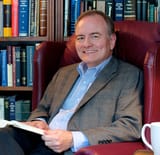
By Dr. Barrett Mosbacker
January 03, 2009
Where is our country headed? What are the trends that will shape American culture? These are the questions that John Zogby, CEO of Zogby International, seeks to answer in his book, The Way We’ll Be: The Zogby Report on the Transformation of the American Dream. Drawing on surveys conducted over a twenty-year period, Zogby analyzed responses from all age and demographic groups to project tectonic shifts in our nation.
Dematerializing
- Institutional authority is all but dead and gone. Self-reliance and self-determination are on the rise.
- “Green” is more than a good slogan. The young especially have internalized sustainability as a life goal, and that is true across the planet.
- Christian conservatives, especially those under thirty, have moved far beyond their putative spokesmen on issues such as stem cell research, global warming, and health care.
- American values remain strong, but Americans increasingly see themselves as part of a bigger picture.
Global, Networked, and Inclusive (First Globals)
- Eighteen- to twenty-nine-year-olds care about more than themselves.
- Young adults celebrate diversity.
- The entire world excites them, not just their community or nation. The young think and buy globally (patriotism will not sell products), and they are sensitized to global issues from human rights to AIDS and poverty, even if they do not always command the facts.
- First Globals poll liberal on many issues, but they are more devoted than any other age group to finding common ground on tough social issues.
- Just about everything is in the public domain (e.g., through social networks like MySpace and Facebook), up to and including intimate details of their lives.
New American Dream: The Secular Spiritualists
- Zogby defines “Secular Spiritualists” as those who believe the American dream is measured in spiritual, not material, fulfillment.
- For at least one in three Americans, spiritual fulfillment is a higher priority than acquisition, ownership, and consumption.
- They buy, of course, but they buy in accordance with their reprioritized lives. Cut the frills, mute the whistles, give good value. It is back to basics for this new stealth force of American society.
- Secular Spiritualists are not big spenders even when they can afford to be.
- God matters to many of them, but they are not building their lives around specifically religious values. They are looking for more meaning, not more doctrines and isms to live by.
One True Thing
- People are demanding truth. Everyone today has a “B.S.” detector.
- People want reality and authenticity.
- Men and women want the same things in each other: natural over silicon, good personality over great bodies, real over make-believe.
- In a world dominated by sizzle, it is all about the steak.
What I find particularly striking is how current the book is. In his introduction, Zogby writes:
Our polling consistently shows not only that the wealth is not being shared equally but that average Americans have made fundamental adjustments in their expectations, their needs, and their values, and that those adjustments are creating whole new paradigms through which people are making consumption and political choices that will shape the nation in the decades to come. (pp. xiv–xv)
He compares and contrasts the perspectives of four generations across political parties and income distribution. He divides them as follows:
- The Private Generation (1926–1945)
- The Woodstock Generation (1946–1964)
- The Nike Generation (1965–1978)
- The First Globals (1979–1990), usually referred to as Generation Y
What Are His Conclusions?
- The America of 2020 will be a more tolerant nation.
- Our people by then will have lived for two decades in a new world of less. We will have gotten comfortable with limitations and embraced more minimal lifestyles and consumption patterns.
- We will expect our leaders to talk straight. Hype, hokum, and hooey, in politics, in advertising, wherever it appears, will be punished.
- We will care about this fragile planet in hitherto unseen ways.
- The Private Generation will fill their golden years with volunteering, mentoring, and lifelong learning.
- Woodstockers will finally get tired of trying to look and act like their children.
- Nikes are going to bond with their families as no generation before them.
- First Globals are ready to go anywhere, experience everything, and work and live in exotic places.
- Americans will continue to define themselves less and less by paid work. “It is who I am, not what I do.”
- In the battle between science and anti-science, science wins. No more Terri Schiavos, and no more global warming denial. Alternative fuels will heat and light our world.
- The church of the future will be a bungalow on Maple Street, not a megastructure in a sea of parking spaces. It is intimacy of experience people long for, not production values.
- The nation of the future will be in a strange way more intimate too. Americans want to live in a world with other people, not in a walled empire surrounded by enemies.
- Zogby’s surveying shows that we are in the middle of a fundamental reorientation of the American character, away from wanton consumption and toward a new global citizenry in an age of limited resources.
It is clear that Zogby has liberal leanings, evidenced by the fact that Arianna Huffington of the Huffington Post is one of the book’s endorsers and by his many statements throughout that reveal his liberal worldview.
Nevertheless, his liberalism does not invalidate solid research and data, though it can shade his interpretations and predictions. To the extent that the data is reliable (and there is no reason to think it is not), there is much to be gleaned from the book.
The role of the leader is to do his or her best to peer over the horizon, seeking to understand the trends and events that will affect our students, our families, and our schools so that we can position them to serve Christ effectively this century.
The Way We’ll Be provides a window into our possible future.